 Inteligente
 ROV Acoustic Systems: Advanced Underwater Navigation, Sonar Imaging, Positioning and Obstacle Avoidance
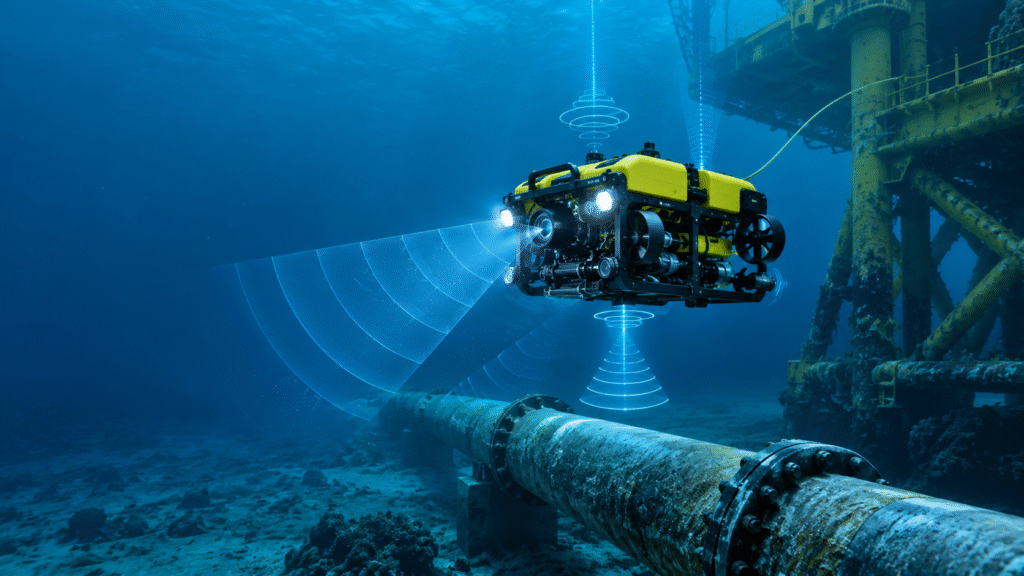
1. Introduction: Making Underwater Operations Smarter with Acoustic Technology
Remotely Operated Vehicles (ROVs) have become essential tools in modern ocean exploration, offshore engineering, underwater inspection, marine research and subsea infrastructure maintenance. By allowing operators to perform underwater tasks remotely from a surface vessel or control station, ROVs significantly reduce the risks and limitations associated with traditional diver-based operations.
Contudo, operating an ROV underwater presents a number of technical challenges. Limited visibility, complex underwater structures, changing currents, positioning errors and communication constraints can all affect mission efficiency and operational safety.
Unlike surface environments, underwater environments do not support conventional GPS positioning. Radio-frequency signals are also significantly attenuated in water, making acoustic technology an important solution for underwater sensing, positioning and communication.
This is where integrated ROV acoustic systems play a critical role.
At GIM, we focus on underwater acoustic technologies and intelligent sensing solutions designed to enhance ROV operational capabilities. By integrating forward-looking sonar, 3D imaging sonar, underwater positioning systems, Doppler velocity sensors, ranging sonar and acoustic communication technologies, ROV platforms can achieve more accurate navigation, improved environmental awareness and more stable underwater operations.
An integrated acoustic system is not simply a collection of independent sensors. It is a coordinated sensing architecture that helps the ROV understand its surroundings, determine its position, maintain its attitude and respond to changing underwater conditions.
2. Why Do ROVs Need Advanced Acoustic Systems?
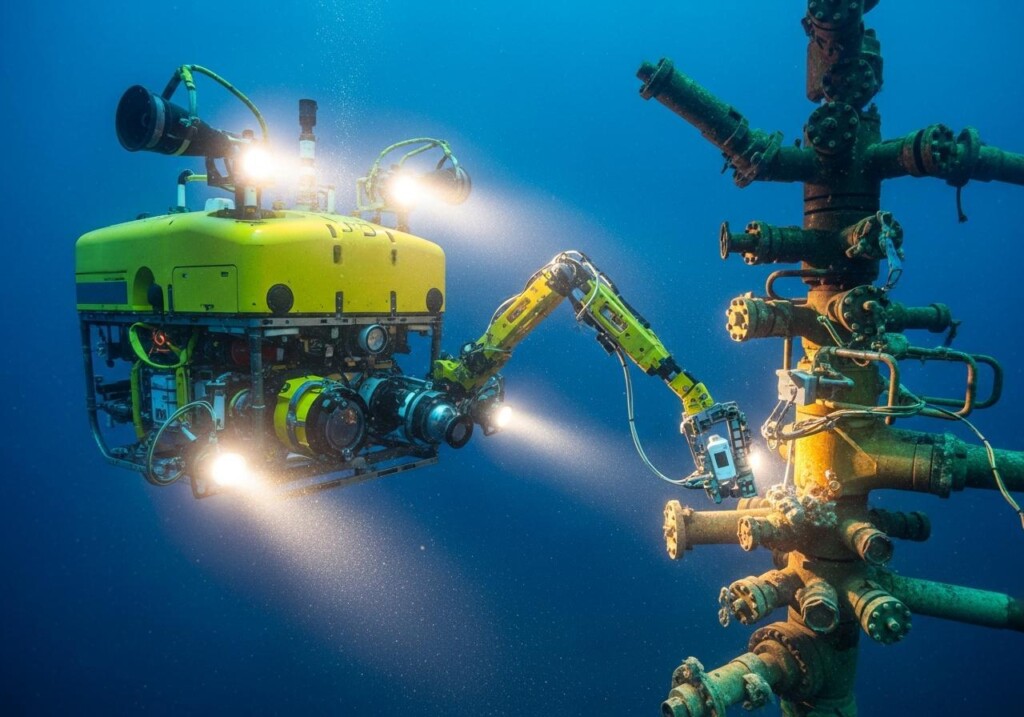
Image caption: Acoustic sensing provides underwater awareness when optical cameras cannot deliver sufficient visibility.
An underwater camera is useful for close-range visual inspection, but its performance can be affected by turbidity, suspended particles, poor lighting and limited visibility.
In many underwater applications, optical cameras alone cannot provide sufficient information for safe navigation and accurate positioning.
Advanced acoustic sensing technologies address several critical challenges:
Underwater Environmental Awareness
Sonar systems transmit acoustic signals and analyze the returning echoes to detect underwater objects, structures and terrain. This allows an ROV to obtain environmental information even when water visibility is poor.
Accurate Underwater Positioning
Acoustic positioning systems help determine the location of an ROV relative to a surface vessel, underwater transponder or other reference points. This information is particularly important for underwater inspection, target searching and subsea construction.
Real-Time Navigation Support
Doppler velocity sensors provide movement information relative to the seabed or surrounding water, depending on the operating mode. These measurements can support navigation, motion estimation and control systems.
Obstacle Detection and Collision Prevention
Forward-looking sonar and underwater ranging sensors help identify obstacles in front of or around the ROV, reducing the risk of collisions with pipelines, cables, structures and other underwater objects.
Stable Hovering and Position Control
ROVs often need to maintain a fixed position while inspecting structures, operating manipulators or performing precision tasks. Acoustic and velocity measurements can provide important feedback for station-keeping control.
Underwater Communication
Acoustic communication systems can provide data transmission between underwater platforms and surface equipment where conventional wireless communication is unavailable or unsuitable.
Together, these technologies help transform an ROV from a remotely controlled underwater vehicle into a more intelligent and capable subsea operating platform.
3. Core Acoustic Technologies for ROV Applications
An effective ROV acoustic configuration should be designed around the vehicle’s mission, operating depth, payload capacity, required positioning accuracy and environmental conditions.
GIM’s reference solution covers several important acoustic technologies.
3.1 Forward-Looking Sonar – Underwater Detection and Obstacle Avoidance
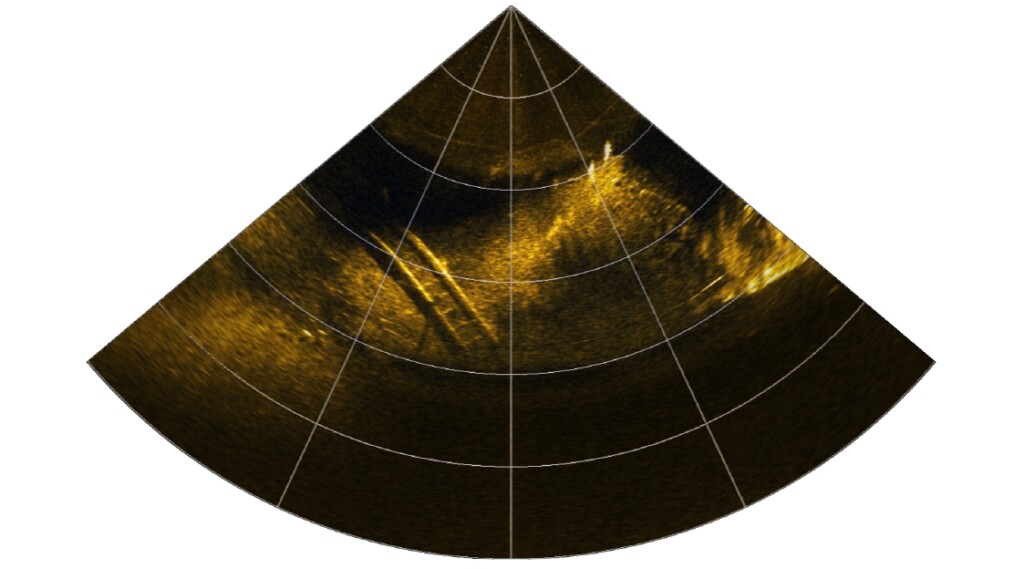
Image caption: Forward-looking sonar helps ROV operators identify underwater objects and obstacles ahead.
Forward-looking sonar is one of the most important sensing technologies for ROV navigation and underwater obstacle avoidance.
The GIM reference configuration includes the Seaview FLS800D forward-looking target detection sonar.
Designed for ROV applications, this type of compact, integrated sonar provides forward-looking acoustic images to help operators identify underwater targets and understand the environment ahead.
Its applications include:
Detecting underwater objects in front of the ROV.
Identifying obstacles in low-visibility environments.
Supporting underwater target searching.
Assisting navigation around subsea structures.
Providing acoustic imaging for inspection missions.
Supporting target recognition and tracking functions.
Compared with optical cameras, forward-looking sonar can provide useful environmental information in turbid water where visual observation is limited.
For underwater construction and inspection, this capability is particularly valuable when an ROV needs to approach pipelines, cables, bridge foundations or other complex structures.
3.2 3D Imaging Sonar – Intelligent Underwater Target Recognition
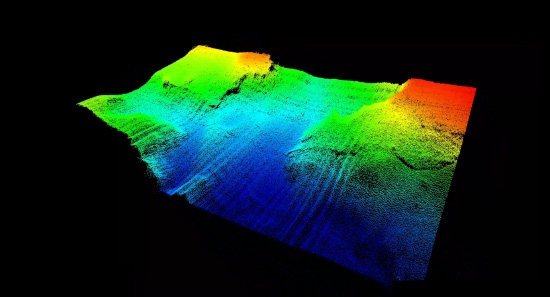
Image caption: 3D acoustic imaging helps operators understand underwater structures and target geometry.
Traditional two-dimensional sonar images can provide useful information about underwater targets, but some applications require more detailed spatial information.
3D imaging sonar provides an additional dimension of environmental understanding, helping operators observe underwater structures and analyze target characteristics.
The HDY-3DL 3D underwater search sonar shown in the reference solution is designed for intelligent underwater target detection and 3D imaging.
Its technology features include:
Real-time three-dimensional imaging.
Underwater target detection.
Automatic target marking.
Target measurement and identification.
Fixed-point and mobile scanning.
AI-assisted underwater target recognition.
These capabilities can be useful for locating submerged objects, examining underwater terrain, inspecting structural components and supporting underwater search operations.
Typical applications include:
Shipwreck detection and investigation.
Subsea structure inspection.
Underwater terrain mapping.
Search and rescue operations.
Marine archaeological surveys.
Inspection of underwater foundations and engineering structures.
For ROV operators, 3D sonar provides more comprehensive spatial information and can help improve target identification and inspection efficiency.
3.3 USBL Acoustic Positioning – Knowing Where Your ROV Is
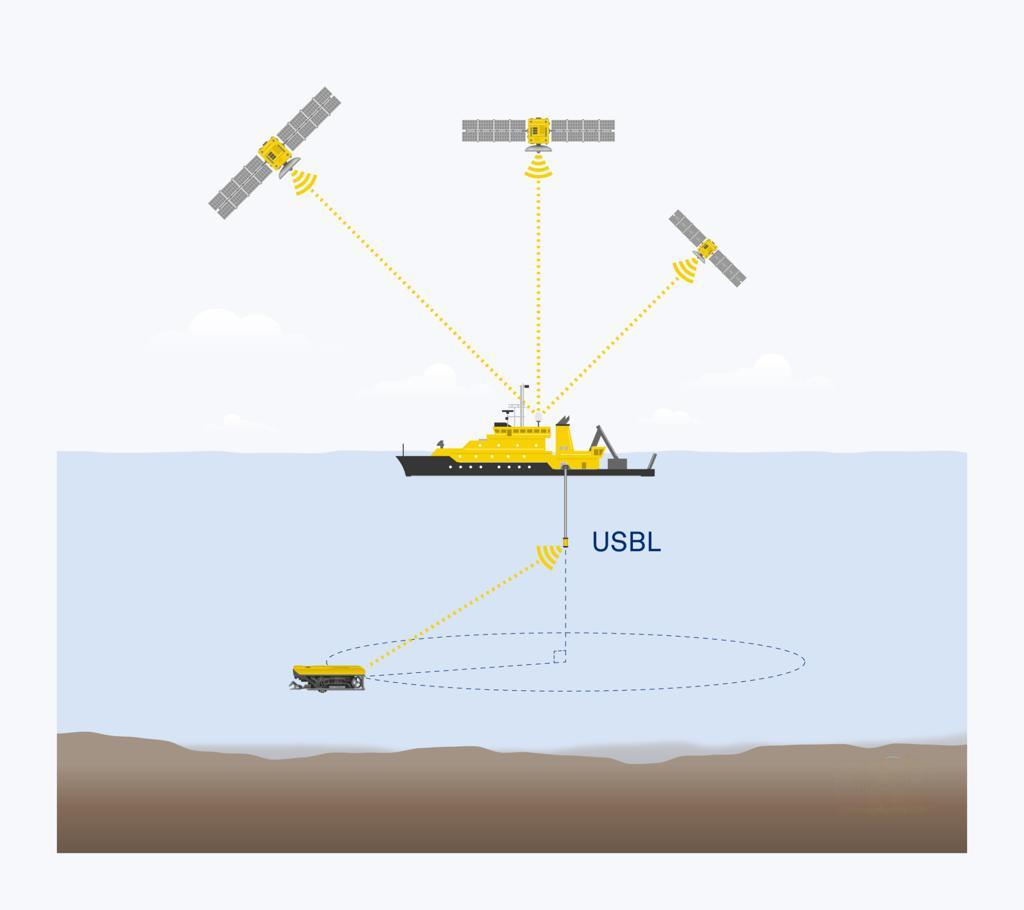
Image caption: USBL acoustic positioning supports underwater vehicle tracking relative to a surface reference.
One of the most important challenges in underwater operations is determining the exact location of an ROV.
GPS signals cannot directly provide underwater positioning. Therefore, acoustic positioning systems are widely used in subsea navigation and tracking applications.
The GIM reference solution includes the UBD1000 ultra-short baseline (USBL) positioning and communication system.
A USBL system generally determines the relative position of an underwater acoustic transponder by measuring the direction and travel time of acoustic signals.
Depending on the system configuration, it can support:
ROV position tracking.
Relative positioning between underwater targets and the vehicle.
Underwater target tracking.
Surface-to-underwater acoustic communication.
Navigation support for subsea operations.
Integration with other navigation sensors.
For inspection projects, accurate position information helps operators return to previously inspected locations, document target coordinates and maintain better control over mission progress.
USBL positioning is particularly useful in offshore engineering, underwater search, marine surveying and subsea infrastructure inspection.
3.4 Doppler Velocity Log (DVL) – Accurate Underwater Motion Measurement
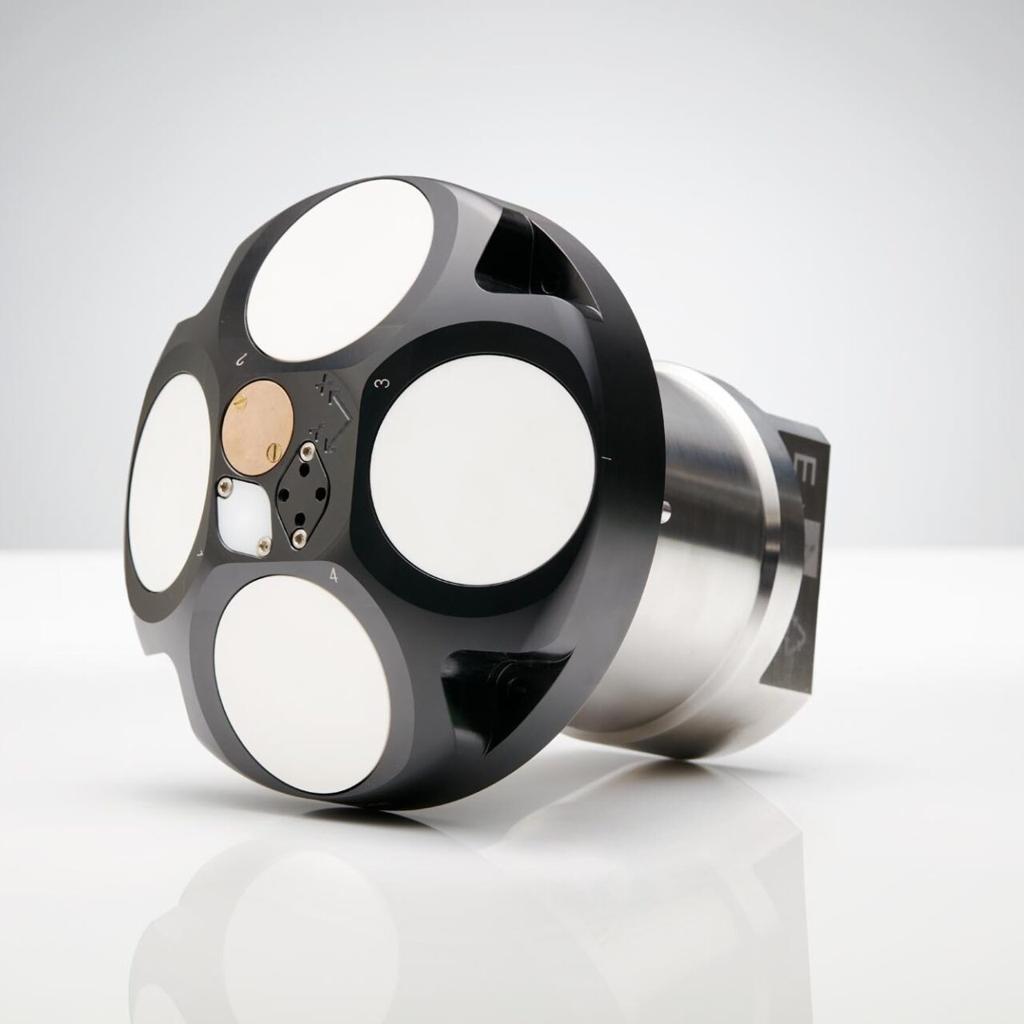
Image caption: DVL technology provides velocity measurements that support ROV navigation and motion control.
A Doppler Velocity Log (DVL) is an important navigation sensor for many professional ROV and AUV platforms.
By transmitting acoustic signals and analyzing Doppler frequency shifts in the returned echoes, a DVL can estimate the vehicle’s velocity relative to the seabed or water column, depending on the selected operating mode.
DVL measurements can support:
Underwater velocity measurement.
Navigation and motion estimation.
Position estimation when integrated with an INS.
Seabed-relative movement monitoring.
Altitude-related navigation information.
ROV station-keeping and motion control.
For ROV operations near the seabed, velocity information is particularly valuable for maintaining a controlled movement speed and supporting repeatable inspection routes.
When integrated with an inertial navigation system and acoustic positioning equipment, DVL data can contribute to a more robust underwater navigation solution.
3.5 Underwater Ranging Sonar – Multi-Directional Obstacle Detection
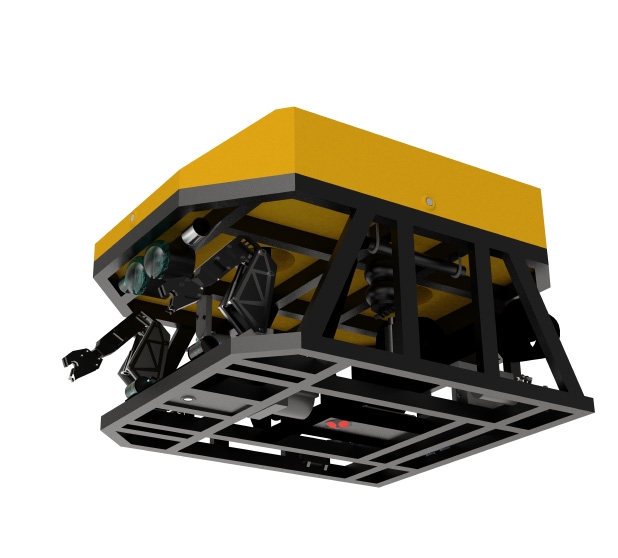
Image caption: Compact ranging sonar sensors can provide distance information around an underwater vehicle.
An ROV may encounter obstacles from multiple directions during underwater operations.
Pipelines, cables, bridge foundations, submerged equipment and underwater structures can create complex operating environments.
The ES300 underwater ranging sonar in the reference solution is designed to provide distance measurements and support obstacle avoidance.
Its compact size and integration flexibility allow installation in different directions on an ROV.
Depending on the vehicle configuration, sensors may be installed to monitor:
Forward obstacles.
Rear obstacles.
Left and right clearances.
Upper clearance.
Lower clearance.
Multi-directional ranging information can help the control system identify potential collision risks and provide warnings to operators.
This is especially important for ROVs working in confined spaces, near subsea infrastructure or around complex underwater structures.
4. ROV Station Keeping: Maintaining Stability in Underwater Currents
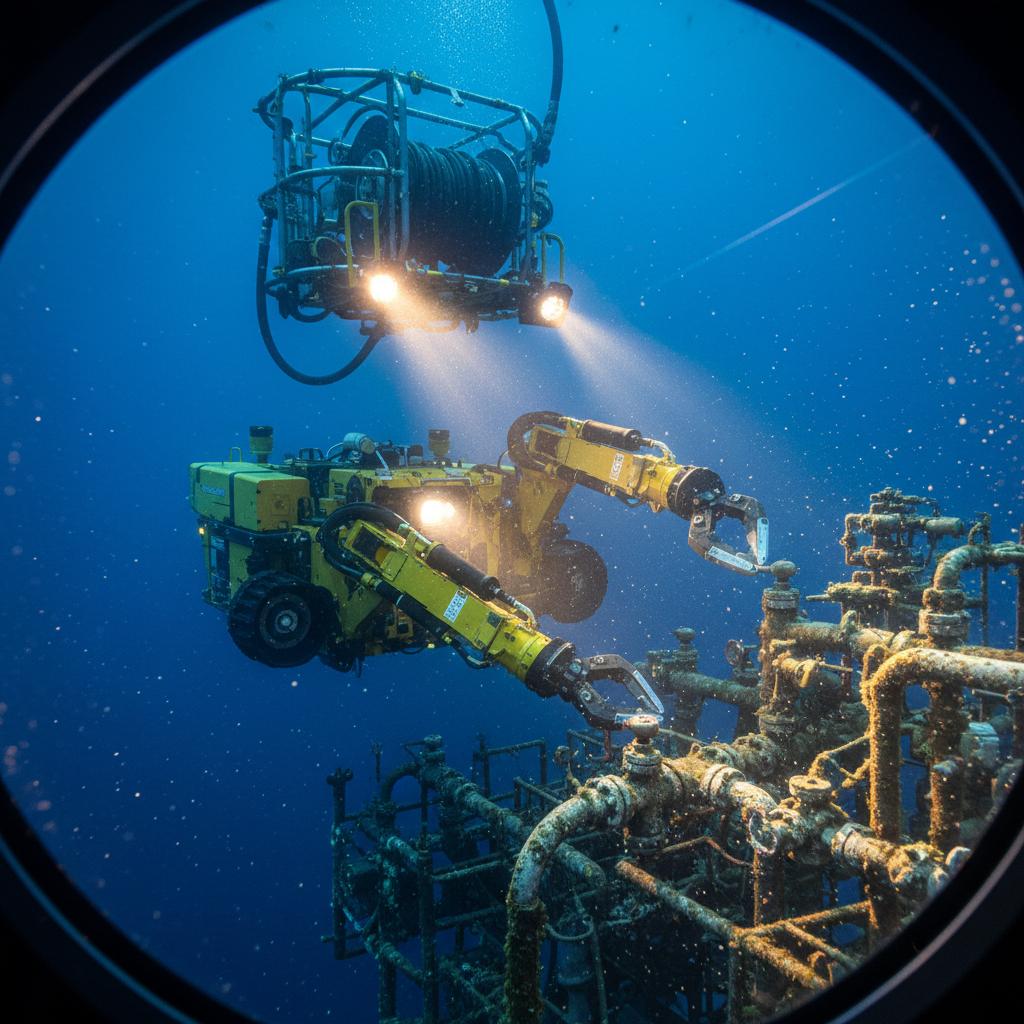
Image caption: Stable station keeping is essential for precise underwater inspection and subsea operations.
Station keeping is one of the most demanding functions in professional ROV operations.
Underwater currents can push an ROV away from its intended position. Changes in payload, manipulator movement and vehicle attitude can also affect its stability.
For example, an ROV performing a subsea inspection may need to remain in a fixed position while its manipulator examines a pipeline joint or retrieves an object.
Without reliable motion measurements and control feedback, maintaining this position can become difficult.
The H1000 anti-current hovering navigation sensor in the reference solution is designed to provide motion-related information for ROV hovering and navigation control.
A coordinated station-keeping configuration may combine:
DVL velocity measurements.
Inertial navigation data.
Acoustic positioning information.
Heading and attitude measurements.
Vehicle thruster control feedback.
By combining these inputs, the ROV control system can estimate vehicle movement and make appropriate adjustments to maintain its intended position.
A properly configured system can support stable hovering under changing operating conditions, including payload changes and different vehicle attitudes.
The final performance depends on the ROV’s propulsion system, control algorithm, sensor configuration, current conditions and installation environment.
5. Integrated ROV Acoustic System: How Different Sensors Work Together
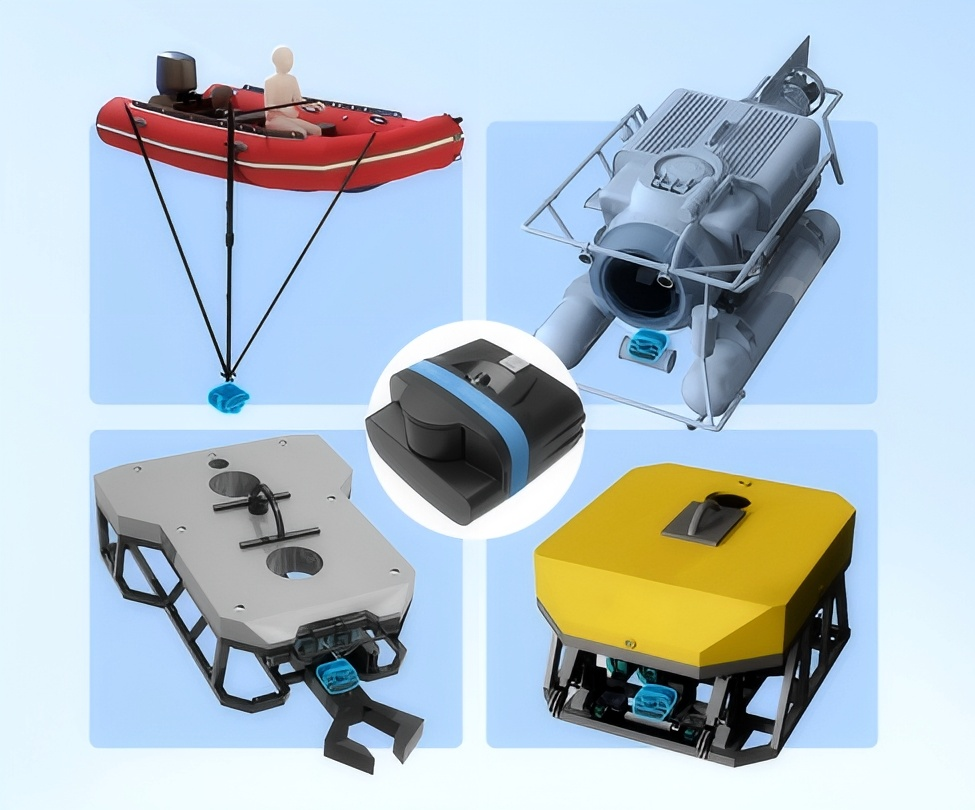
Image caption: An integrated acoustic architecture combines multiple sensing technologies to support underwater operations.
The real value of an advanced ROV acoustic system comes from integrating multiple sensors into one coordinated architecture.
Each sensor has a different role, and their information can complement one another.
The following table illustrates a representative configuration based on the reference solution.
| Equipment | Main Function | ROV Application |
|---|---|---|
| FLS800D | Forward-looking sonar | Target detection and forward obstacle avoidance |
| HDY-3DL | 3D imaging sonar | 3D target search and structural imaging |
| UBD1000 | USBL positioning and communication | Underwater position tracking and acoustic communication |
| DVL / velocity sensor | Velocity and motion measurement | Navigation and movement control |
| ES300 | Underwater ranging sonar | Multi-directional distance measurement |
| H1000 | Anti-current hovering navigation sensing | Station keeping and hovering stability |
The exact configuration should be selected according to the mission requirements and platform compatibility.
For example, an ROV designed for general underwater inspection may prioritize forward-looking sonar, ranging sonar and positioning equipment.
A vehicle designed for precision subsea operations may require additional velocity sensing, inertial navigation and station-keeping capabilities.
A search-and-recovery platform may place greater emphasis on 3D imaging sonar and target positioning.
The goal is not simply to install more sensors, but to select the right technologies and integrate their data effectively.
6. Typical Applications of ROV Acoustic Systems
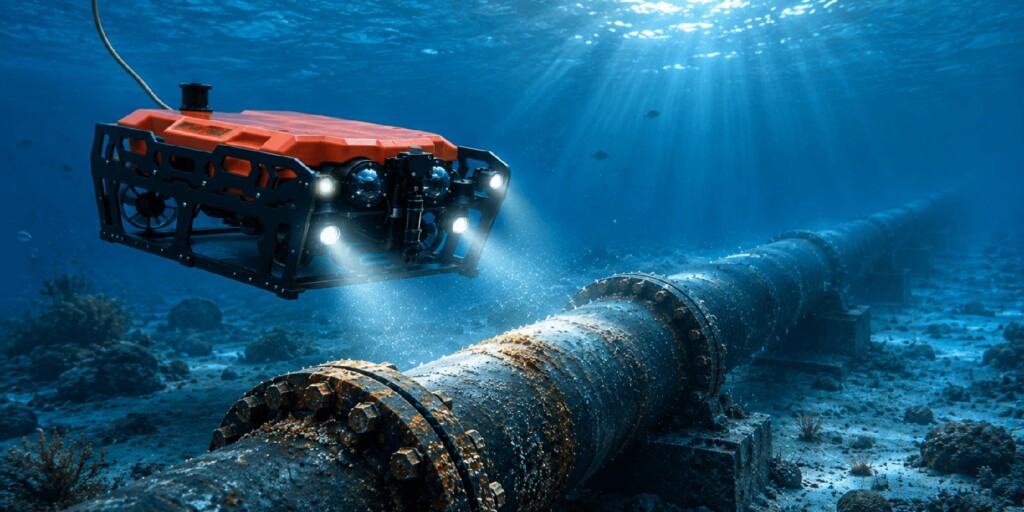
Image caption: ROV acoustic systems support inspection, surveying and maintenance of subsea infrastructure.
6.1 Offshore Oil and Gas Inspection
ROVs are widely used to inspect subsea pipelines, offshore platforms, underwater connectors and marine infrastructure.
Acoustic imaging and positioning technologies can help operators locate structures, inspect target areas and maintain awareness during underwater operations.
6.2 Subsea Cable and Pipeline Installation
During underwater construction, ROVs may be required to monitor cable routes, identify obstacles and verify installation positions.
Forward-looking sonar, ranging sonar and acoustic positioning can provide important support throughout these operations.
6.3 Underwater Search and Recovery
Locating submerged objects can be challenging, particularly in deep or turbid water.
3D imaging sonar and forward-looking sonar can help identify underwater targets and support subsequent ROV inspection or recovery operations.
6.4 Bridge and Marine Infrastructure Inspection
Bridge foundations, harbor structures, dams and underwater foundations require regular inspection.
ROVs equipped with acoustic sensing systems can examine underwater structures and collect information from locations that are difficult or unsafe for divers to access.
6.5 Marine Scientific Research
ROVs are increasingly used in marine research, underwater ecological surveys and seabed exploration.
Integrated sensing technologies can support underwater mapping, environmental observation and scientific data collection.
6.6 Underwater Construction and Special Operations
For underwater welding, salvage, installation and manipulator-based operations, stable positioning and accurate environmental awareness are essential.
Acoustic navigation and station-keeping technologies can help improve operational control and precision.
7. Key Factors When Selecting an Acoustic System for an ROV
Not every ROV requires the same acoustic configuration. Selecting the appropriate equipment requires an understanding of the actual mission and vehicle design.
Before choosing an underwater acoustic system, consider the following factors.
Operating Depth
The pressure rating of each sensor must be compatible with the intended operating depth of the ROV.
Vehicle Size and Payload Capacity
Sensor dimensions, weight, mounting position and power consumption should be evaluated to avoid affecting vehicle balance and propulsion performance.
Required Detection Range
Different sonar applications require different detection ranges and resolution. Forward-looking navigation, close-range obstacle avoidance and 3D imaging may require different sensor configurations.
Positioning Accuracy
The required positioning accuracy depends on whether the mission involves general inspection, precise target location, subsea installation or scientific surveying.
Water Conditions
Turbidity, suspended particles, current velocity, acoustic noise and seabed characteristics may affect system performance.
Data Interfaces and Integration
The communication interfaces, data formats, power requirements and control protocols must be compatible with the ROV’s onboard computer and navigation system.
Mission-Specific Requirements
An ROV designed for pipeline inspection may require a different sensor combination from one used for shipwreck search, underwater construction or scientific exploration.
A well-designed acoustic solution should balance performance, integration complexity, operational reliability and total system cost.
8. GIM: Underwater Acoustic Technologies for Intelligent ROV Operations
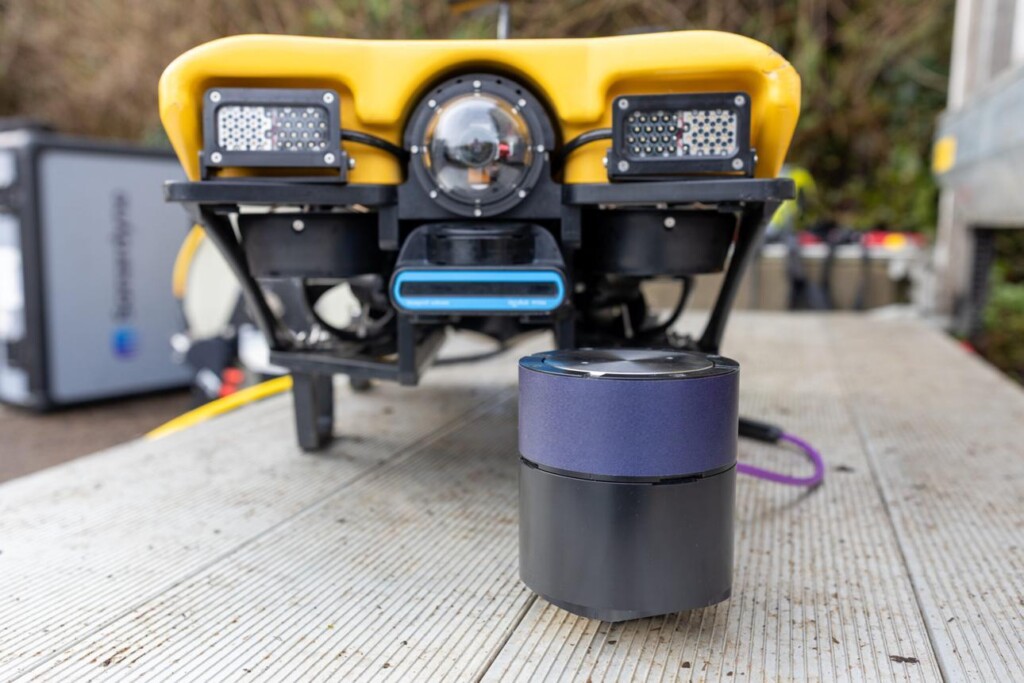
Image caption: GIM focuses on acoustic sensing and navigation technologies for professional underwater applications.
GIM is committed to providing underwater acoustic equipment and intelligent sensing solutions for professional marine applications.
Our ROV-related acoustic technology portfolio covers several important areas:
Forward-looking sonar for underwater target detection.
3D imaging sonar for intelligent underwater search.
USBL positioning and acoustic communication systems.
Doppler velocity sensing for underwater navigation.
Underwater ranging sonar for obstacle avoidance.
Anti-current hovering navigation sensors.
Integrated acoustic sensing solutions for different underwater platforms.
These technologies can be selected and configured according to different ROV platforms and mission requirements.
For ROV manufacturers, system integrators, marine engineering contractors and underwater equipment distributors, selecting compatible acoustic sensors is an important step in improving overall vehicle capability.
GIM aims to support customers in building more intelligent, reliable and efficient underwater sensing systems.
9. Frequently Asked Questions About ROV Acoustic Systems
Q1: Why does an ROV need sonar if it already has an underwater camera?
An underwater camera provides optical images, but visibility may be severely reduced by turbidity, suspended particles and poor lighting. Sonar uses acoustic signals and can provide environmental and target information when optical visibility is insufficient. The two technologies complement each other.
Q2: Can an ROV use GPS underwater?
Conventional GPS signals cannot directly provide underwater positioning. ROVs generally rely on acoustic positioning systems, inertial navigation and velocity sensors to estimate their underwater position and movement.
Q3: What is the difference between forward-looking sonar and 3D imaging sonar?
Forward-looking sonar is primarily used to detect objects and obstacles ahead of a vehicle. 3D imaging sonar provides spatial information about underwater targets and structures, helping operators understand their geometry and surroundings.
Q4: What is the purpose of a USBL positioning system?
A USBL system helps track an underwater vehicle or acoustic target relative to a surface reference. It is commonly used for underwater positioning, target tracking and navigation support.
Q5: How does a DVL improve ROV navigation?
A DVL measures underwater velocity using acoustic Doppler principles. Its data can be integrated with inertial navigation and positioning systems to improve motion estimation and navigation performance.
Q6: Why is station keeping important for an ROV?
Station keeping allows an ROV to maintain a desired position while performing inspection, manipulation, installation or other precision operations. It is especially important when underwater currents or payload changes affect vehicle movement.
Q7: Can GIM acoustic equipment be integrated into different ROV platforms?
Integration depends on the ROV’s mechanical structure, operating depth, available power, data interfaces and mission requirements. Equipment selection and integration should be evaluated according to the specific platform.
10. Conclusion: Building More Capable ROV Platforms with Acoustic Intelligence
The future of underwater robotics depends not only on the mechanical design and propulsion performance of ROVs, but also on their ability to perceive, navigate and interact with complex underwater environments.
Forward-looking sonar improves environmental awareness. 3D imaging sonar provides more detailed spatial information. USBL systems support underwater positioning. DVL sensors provide velocity measurements. Ranging sonar assists obstacle avoidance, while dedicated hovering sensors support stable underwater operations.
When these technologies are properly integrated, they can significantly enhance an ROV’s operational capabilities across offshore engineering, Levantamento Marítimo, subsea infrastructure inspection, underwater search and scientific research.
GIM – Advanced Acoustic Technologies for Smarter Underwater Operations.
Whether you are developing a new ROV platform, upgrading an existing underwater vehicle or selecting acoustic equipment for a specialized subsea project, GIM can help you explore suitable sensing and navigation solutions.
Contact GIM to discuss your ROV acoustic system requirements and underwater application.
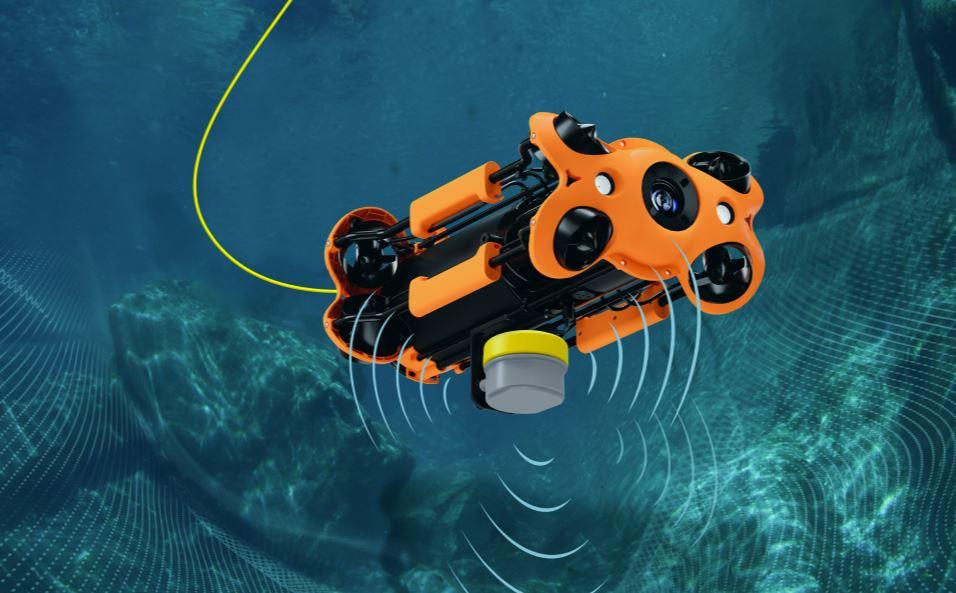
Marine Sonar Technology, Underwater Acoustics and Ocean Exploration Resources
Forward Looking Sonar (FLS) technology plays an important role in
detecção de obstáculos subaquáticos, exploração marinha, subsea inspection,
and autonomous underwater vehicle navigation. For applications involving
Remotely Operated Vehicles (ROVs), Autonomous Underwater Vehicles (AUVs),
and underwater robotics, reliable acoustic imaging and environmental
awareness are essential for safe and efficient underwater operations.
The following resources provide further information about hydrographic
surveying, underwater acoustic technology, oceanographic research,
marine robotics, and deep-sea exploration. These references are provided
for technical research and educational purposes.
1. Government Oceanographic and Marine Research Resources
NOAA – Hydrographic Surveying and Marine Exploration
NOAA Ocean Exploration – Deep Ocean Exploration and Research
NOAA – Remotely Operated Underwater Vehicles (ROVs)
NOAA – Autonomous Underwater Vehicles and ROV Systems
NOAA – Deep Ocean Exploration and Seafloor Data
NOAA – Uncrewed Marine Systems and Autonomous Ocean Technology
NOAA – Autonomous Underwater Vehicle (AUV) Technology
NOAA – Remotely Operated Vehicle (ROV) Technology
2. International Standards and Ocean Science Organizations
International Hydrographic Organization (IHO) – Hydrographic Standards
IHO – Standards for Hydrographic Surveys (S-44)
International Organization for Standardization (ISO) – Underwater Acoustics
National Science Foundation (NSF) – Ocean Science Research Infrastructure
Ocean Observatories Initiative (OOI) – Oceanographic Research
OOI – Underwater Sonar and Acoustic Sensing
OOI – Oceanographic Instruments and Underwater Sensors
3. Marine Robotics and Underwater Technology Research
Woods Hole Oceanographic Institution (WHOI) – Ocean Science Research
WHOI – Oceanographic Systems Laboratory and Marine Robotics
WHOI – Deep Submergence Laboratory and Underwater Exploration
Monterey Bay Aquarium Research Institute (MBARI) – Autonomous Underwater Robotics
Carnegie Mellon University – Autonomous Underwater Robotics Research
About GIM Forward Looking Sonar Technology
GIM provides underwater acoustic imaging and sonar solutions for
professional marine applications. Forward Looking Sonar technology
supports underwater situational awareness by helping operators detect
obstacles, identify underwater structures, and improve navigation
awareness in challenging underwater environments.
Typical application areas include ROV and AUV navigation, underwater
inspection, exploração marinha, subsea operations, underwater search,
and obstacle detection.
By combining advanced acoustic sensing with underwater imaging
technology, Forward Looking Sonar systems can support safer and more
efficient underwater operations across a wide range of marine
environments.
GIM – Underwater Sonar and Marine Exploration Technology.